Thinking Like Sherlock Holmes · Handout
Read the Bible like a good detective: gather the evidence before reaching a verdict, and let ten questions walk you from what the text says, through what it meant, to how God is inviting you to live it.
Published October 6, 2026 · Updated October 6, 2026
Lesson Big Idea
The bad detective decides who is guilty and bends every clue to fit. Sherlock Holmes gathers the clues and lets them lead. Read the Bible like Holmes, and let ten questions walk you from the page to your life.
Core Thesis
Read the Bible like a good detective: gather the evidence before reaching a verdict, and let ten questions walk you from what the text says, through what it meant, to how God is inviting you to live it.
The Three Action Pairs
- Meditate and Obey
- Study and Apply
- Hear and Do
Key Scriptures
- Proverbs 18:13–17
- Proverbs 2:1–5
- Matthew 7:1–6
- Luke 6:36–37 and John 7:24
- Luke 24:44–45
- John 14:21 and John 15:9–10
The Ten Questions
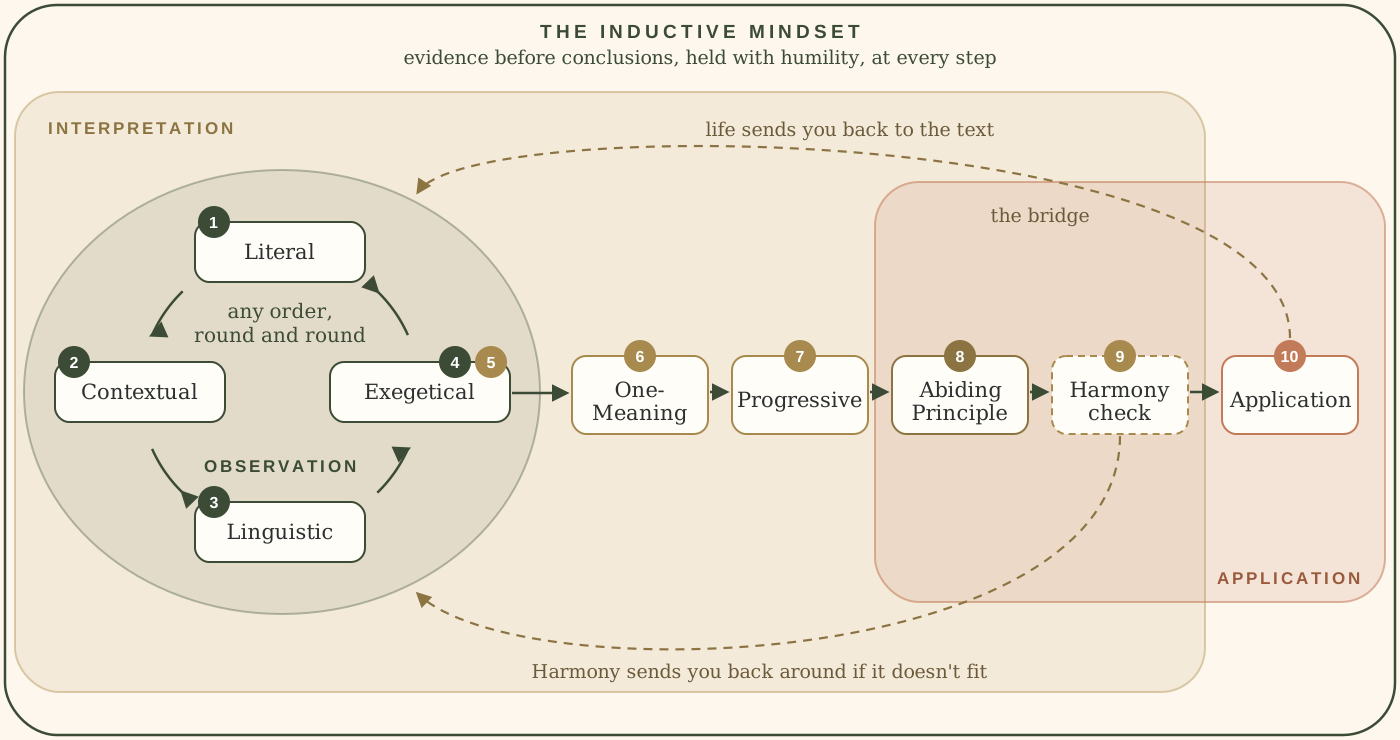
Questions 1 to 4 go round and round, in any order, until the meaning comes clear; then the road runs on. Harmony, or life itself, can send you back around.
Inductive Bible Study
A time-tested method for handling "the word of truth" accurately (2 Timothy 2:15, BSB)
| # | The question to ask | Stage | Guardrail |
|---|---|---|---|
| 1 | What genre is this, and what does it actually say in that genre? | Observation | Literal |
| 2 | What surrounds it, what did the first readers know, and where does it sit in the whole story? | Observation | Contextual |
| 3 | Is there a word where the Hebrew or Greek adds nuance? | Observation | Linguistic |
| 4 | What is the Author saying in this passage to the original audience? | Observation, turning into Interpretation | Exegetical: drawing the meaning out |
| 5 | What am I bringing to this text that I need to let go of? | Interpretation: a posture check | Exegetical: not reading a meaning in |
| 6 | What is the one thing this meant when it was first given, before later revelation illuminated it further? | Interpretation | One-Meaning |
| 7 | Where does this sit in the unfolding story? What had God revealed by then, and what did He reveal later? | Interpretation | Progressive |
| 8 | What is the timeless, abiding principle that applies to us today? | The bridge to Application | Abiding principle |
| 9 | Do clear passages elsewhere agree with my reading? | A check on the meaning and the principle | Harmony |
| 10 | How might we apply this abiding principle to our lives today? How is God inviting you to live out this abiding principle this week? | Application | Application |
What This Lesson Teaches
1. Two detectives, two ways to read.
Holmes: "You see, but you do not observe," and "It is a capital mistake to theorise before one has data" (Arthur Conan Doyle, "A Scandal in Bohemia").
| Deduction (the bad detective) | Induction (Holmes) |
|---|---|
| Assumption based | Evidence based |
| Starts with the answer and looks for support | Starts with the clues and builds toward the answer |
| "You begin with certain assumptions or beliefs and allow the Bible only room to support those assumptions or beliefs." | "You explore the Bible and arrive at conclusions only once you've compiled all the evidence." |
The deductive posture comes to the Bible to prove or disprove a view already chosen. The question is the posture, not the topic. Solomon taught Israel: "He who answers a matter before he hears it—this is folly and disgrace to him" (Proverbs 18:13, BSB).
2. Why the inductive mindset matters.
- It honors what the Bible is: an ancient book from God, heard on its own terms.
- It keeps us from bending the Bible: our beliefs shaped by Scripture. Doctrine comes last, built up from the texts.
- It grows discernment: like the Bereans (Acts 17:11), weigh every voice against Scripture, including this one.
- You can start now: "whether reading a devotion at the breakfast table or preparing next week's sermon at the office."
"If you seek it like silver and search it out like hidden treasure, then you will discern the fear of the LORD and discover the knowledge of God" (Proverbs 2:4–5, BSB).
3. Three stretches of road.
| Stretch | The question | What it does |
|---|---|---|
| Observation | What does it say? | Lays all the pieces on the table: "good observation will ensure that all the pieces are available." |
| Interpretation | What did it mean? | Finds what the author meant for his first audience, once observation is done. |
| The bridge: the abiding principle | What timeless truth carries over? | Connects the first meaning to God's people in every age. |
| Application | How do we live it? | For God's people today, then for me. "Valid application must have its basis in an accurate interpretation of the text." |
4. The road circles back.
The questions run in order, but the road climbs like a switchback, passing the same valley higher each time. "There will inevitably be movement back and forth between these steps, but the general flow will be linear" (Fuhr and Köstenberger).
| The loop | What sends you back |
|---|---|
| A word sends you back to the context | Question 3 finds a word with a range of meanings; question 2 decides which one fits. |
| Harmony sends you back to the start | Question 9 finds a clash with clear passages; check the genre, the context, the words, and whose meaning you're after. |
| Life sends you back to the text | Question 10 raises a new question; look again at the meaning and the details. |
5. The drive: Matthew 7:1–6.
"Do not judge, or you will be judged. For with the same judgment you pronounce, you will be judged, and with the measure you use, it will be measured to you" (Matthew 7:1–2, BSB).
| # | What we found |
|---|---|
| 1 | A sermon to Jesus' disciples, full of humor and hyperbole: a roof beam in the eye. |
| 2 | Surrounded by mercy (5:7), forgiveness (6:14–15), warnings about hypocrites, the Golden Rule (7:12), and "By their fruit you will recognize them" (Matthew 7:16, BSB). Dogs were wild scavengers; pigs were unclean (Leviticus 11:7). |
| 3 | Krinō ranges from telling apart to condemning. Loop: the context decides. Verse 5 expects clear sight; verse 16 expects discernment. Eye runs through 7:3–5 and the whole sermon (6:22). |
| 4 | Don't set yourself up as the judge who condemns your brother while ignoring your own sin. Deal with your own first, then help. |
| 5 | Don't judge me, or a love of finding faults? I set both down. |
| 6 | Jesus forbids the condemning, fault-finding spirit, not discernment or loving correction. Loop: verse 6 seems to clash, so look again; it balances verses 1–5. Faithful readers differ on its details. |
| 7 | "Judgment belongs to God" (Deuteronomy 1:17, BSB). Later: Matthew 18:15; "restore him with a spirit of gentleness. But watch yourself" (Galatians 6:1, BSB). |
| 8 | God alone is the Judge. Those who have received His mercy examine themselves first, then help others humbly and gently, and use discernment without condemning. |
| 9 | "Do not condemn, and you will not be condemned" (Luke 6:37, BSB); "Stop judging by outward appearances, and start judging justly" (John 7:24, BSB). Loop: the principle passes both checks. |
| 10 | A parent, a coworker, an online post, a friend who mocks the faith. How is God inviting you to live out this abiding principle this week? |
6. Humble confidence.
Inductive conclusions are "by nature probable and not absolute," yet "you can approach the text with confidence, expecting to be able to understand its meaning." On the evening He rose, Jesus "opened their minds to understand the Scriptures" (Luke 24:45, BSB). Study carefully, and pray as you study.
Main Takeaways
- Gather the evidence before you reach a verdict.
- Observation, Interpretation, Application: what it says, what it meant, how to live it, with the abiding principle as the bridge.
- Ten questions walk the guardrails in order; expect the road to circle back.
- Do not judge means stop playing God, not stop seeing clearly.
- Hold conclusions with confidence where the evidence is clear and with humility where it isn't.
Reflection Questions
- When have I come to the Bible already knowing what I wanted it to say?
- Which of the ten questions do I tend to skip?
- What beam might be in my own eye right now?
- Who could I help this week with a clear eye and a gentle hand?
This Week's Response
How is God inviting you to live out this abiding principle this week?
- Read the full lesson page on your own; it covers more than the class had time for.
- Read the Sermon on the Mount, Matthew 5–7, in one sitting, and notice every time Jesus talks about the eye.
- Walk the ten questions through one short passage (Luke 6:36–38 or Philippians 2:1–5).
- Write one step of obedience you will take this week: ______________________________________
Memory Line
Meditate and Obey. Study and Apply. Hear and Do.
This is how we abide in Christ. This is how we demonstrate our love for God.